

Global turbulence demands responsible politics
Stop turning supply disruptions into political drama
Global turbulence demands responsible politics

It is a matter of concern that the opposition’s hostility towards Prime Minister Narendra Modi has reached a point where some leaders appear unwilling to stand by the country even during moments of global uncertainty. In a parliamentary democracy, the opposition is not merely a critic of the government; it is a government-in-waiting. The Leader of the Opposition is often described as a “shadow prime minister.” That position carries high responsibility along with the right to question.
Opposition parties are fully entitled to challenge the government in Parliament, demand accountability and organise protests. But pressing the panic button before a situation turns into a real crisis does little service to the country. Unfortunately, the tendency to politicise every issue has grown stronger, with the hope that repeated accusations and exaggerated narratives will eventually erode public confidence in the government.
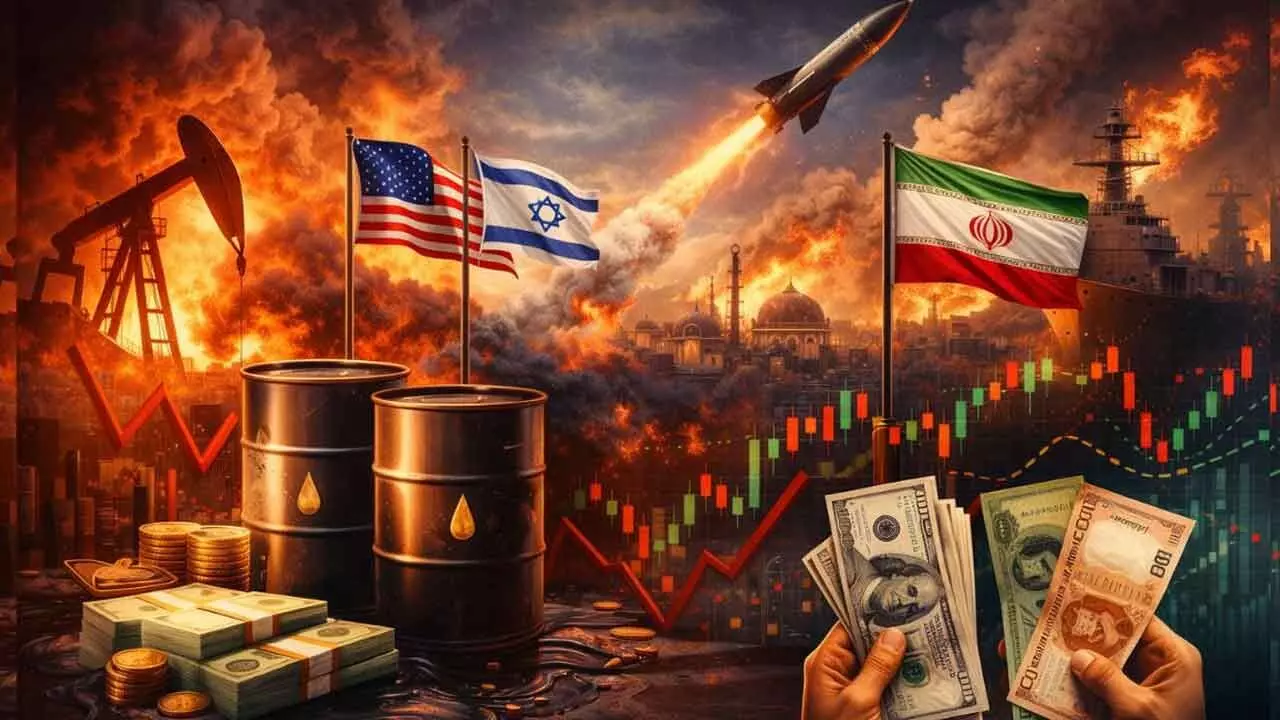
The escalating tensions between Israel and Iran have indeed sent tremors across global energy markets. For a country like India, which depends heavily on imported energy, even distant geopolitical conflicts can create ripple effects across domestic supply chains. Markets are volatile and react quickly to uncertainty. A prolonged war in West Asia could disrupt shipping routes, particularly through the Strait of Hormuz, through which a significant portion of global oil and gas trade flows.
One hopes that the conflict will subside soon and normal energy shipments will resume. But geopolitical situations rarely follow predictable timelines. Even when leaders such as Donald Trump describe military actions as “short-term excursions,” neither the people nor the global energy market do not always respond with equal optimism.
India imports roughly 60 percent of its LPG requirements, while nearly half of its natural gas needs also come from overseas suppliers. Much of this supply originates from Qatar and other West Asian countries. When shipping routes become uncertain, delays and cost escalations are inevitable.
Recent concerns about LPG availability in some Indian cities illustrate this vulnerability. Yet the political reaction within India raises a deeper question: is the situation a genuine crisis, or merely a temporary disruption that is being amplified for political mileage?
A balanced view requires acknowledging two simultaneous realities. First, the conflict in West Asia has caused disruptions in LPG supply chains. Second, available evidence suggests that India is not facing a full-blown energy crisis.
The geography of global trade explains why such disruptions occur. The Strait of Hormuz is one of the world’s most critical maritime chokepoints, handling roughly one-fifth of global crude oil shipments and a substantial share of LPG cargo. When tensions escalate in that region, shipping insurance costs rise, cargo movements slow, and supply chains experience temporary stress.
India’s energy dependence magnifies the impact. The country imports a large share of its LPG consumption, and most shipments pass through the Hormuz route. Even a brief disturbance in this corridor can create psychological anxiety in markets and logistical delays in deliveries. Reports suggest that LPG prices have risen moderately, with domestic cylinders becoming about ₹60 costlier and commercial cylinders witnessing sharper increases. Some restaurants, cloud kitchens and small eateries in cities such as Hyderabad, Mumbai, Bengaluru, Ahmedabad and Chennai have reported difficulties in securing commercial cylinders. A few establishments have temporarily shifted to induction stoves and trimmed menu offerings to cope with the situation.
These challenges are real and should not be dismissed. Small businesses that depend heavily on commercial LPG understandably feel the pressure. However, these disruptions must be viewed in perspective.
So far, the government’s response appears focused on preventing panic rather than managing a severe shortage. Officials say refineries have been instructed to maximise LPG production by diverting propane and butane streams toward cooking gas output. Regulatory measures have also been issued to prioritise domestic households and essential services such as hospitals and educational institutions.
Authorities have taken steps to curb hoarding and black-marketing by regulating booking intervals for LPG refills and strengthening monitoring mechanisms. These measures suggest that the government is attempting to stabilise supply during a volatile global situation.
Importantly, officials have repeatedly emphasised that household LPG supply remains protected, even if commercial users face temporary constraints. This distinction is significant. A shortage affecting restaurants or certain industries is inconvenient and economically important, but it is vastly different from a nationwide household fuel crisis.
Opposition parties have criticised the government’s handling of energy security. In a democracy, such scrutiny is both legitimate and necessary. India’s dependence on imported energy is a structural challenge that successive governments have struggled to address. Questions about strategic reserves, diversification of supply sources and long-term energy planning are entirely valid.
However, criticism crosses into irresponsibility when it fuels unnecessary public anxiety.
In recent days, rumours circulating on social media have triggered queues at fuel stations and fears of widespread shortages. Panic buying can create artificial scarcity far more quickly than actual supply disruptions. Energy security is a sensitive domain where political rhetoric can easily translate into public alarm.
India consumes more than 30 million tonnes of LPG annually but produces less than half domestically. This gap means that geopolitical disturbances—from Gulf conflicts to shipping disruptions—will inevitably affect domestic supply conditions.
Reducing this vulnerability requires long-term strategies: diversifying import sources, strengthening strategic reserves, investing in alternative energy and expanding domestic production. These are structural reforms that cannot be achieved overnight.
Energy supply shocks during global conflicts are not new to India. Similar situations arose during the Gulf War, the Iraq conflict and earlier crises in West Asia. Each time the challenge has been the same—maintaining public confidence while managing supply adjustments.
Political leadership, across party lines, must resist the temptation to convert every disruption into a national emergency.
The opposition has every right to demand transparency and preparedness. But repeatedly projecting a temporary logistical strain as a systemic collapse risks undermining public confidence and economic stability. The Israel-Iran confrontation serves as a reminder of how deeply interconnected the global economy has become. A military conflict thousands of kilometres away can affect kitchens and restaurants in Indian cities within days.
But it also highlights another lesson: responsible politics matters during uncertain times.
India today faces a supply disruption—not the collapse of its energy security system. What the country needs is calm assessment, transparent communication and political maturity. The opposition would do well to keep an open mind, question the government where necessary, but resist amplifying panic. In moments of geopolitical turbulence, national resilience is strengthened not by alarmism but by responsible leadership.
(The author is a former Chief Editor at The Hans India)





